Monday, 3 January 2022

One Man's Opinion: MR SALARY by SALLY ROONEY


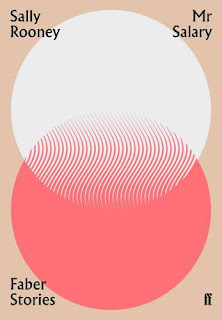
A nice surprise at Christmas this, Sally Rooney's short story Mr Salary

It's great to see short fiction sold like this and it's a fine way to explore the work of writers you love or those you might want to check out in the future. 

Mr Salary is a wealthy Irishman who picks up Sukie upon her return from Boston. Sukie's motives for coming home are mixed. Her father is dying of leukemia, she isn't making significant relationships in the States, it's Christmas and the man she loves is in Dublin. 

The size of the piece is small, but the scope is fairly large. Those who've read the novels will feel they're in familiar territory in terms of the glances of the poetic language, the abrupt and direct approaches of the protagonist, the sexual tension, submission and purpose. 

It works as a one off and as it is, but I'd be more than happy to read on and find out what might lay ahead for the trio involved; there are certainly great riches to be mined and explored here and if it were an opening chapter, it would be a great springboard into a novel.

An inspired gift, Nancy (such a treat and the words in your card meant a huge amount), one that I can recommend for the Christmas stockings of 2022. 


Sunday, 2 January 2022

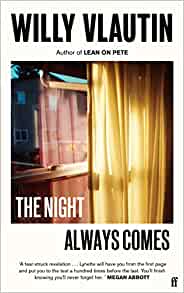
One Man's Opinion: THE NIGHT ALWAYS COMES by WILLY VLAUTIN


 '"You know that easy thing he had? You know the way he was?"
"Yeah," Lynette said.
"He doesn't have that any more."

Happy New Year to you all and thanks for popping by.

I caught myself reflecting on 2021 and being glad to see the back of it. There were some tough things to deal with, the death of my father being the biggest of all. I began to attribute the worst of it all to the year itself, then realised that among the struggles were moments of joy and big success for those around me, which helped me to smile. On reflection, years are just blocks of time and if you look at a big enough block there’s bound to be more than one rough patch in there. Bad things happen to us all. Life, no matter how smoothly things are going, is problematic- health, death, working or not working, money, time pressures, stress, repairs, fitness, our own batches of flaws- it’s going to be hard. All is sorrow, as they say, and the sooner we grasp that the sooner we can embrace the whole package.  

Which is why I love Willy Vlautin’s books so much. He deals with the struggles head on, balances the problems with the pleasures of simple things and constructs stories that are powerful, involving and engaging. He takes the ordinary, holds up a mirror to it and lets us know that there’s no such thing.

I’d been saving The Night Always Comes (US) for a rainy day, or rather a day when the storms had sufficiently calmed. I finally picked it up during the Christmas holiday and finished it within twenty-four hours; given my issues with concentration of late, that’s really quite something. As expected, it grabbed my attention, had my emotions rising to the surface and absorbed my thinking for the duration.

The novel follows Lynette, a young woman who is trying desperately to put troubled times behind her and to build something for herself, her mother and her brother. Her mother, however, has other ideas and finally admits that Lynette’s vision isn’t going to suit.

Lynette’s world is turned upside down. She has to fight to keep her past instabilities from taking over, while having to reach into the extremes of that past to find the passion she needs to survive what lies ahead.

In a bid to collect all the money she needs for a mortgage, she calls in markers from the men who have paid for her services and from anyone she’s lent money to in the past. Some are ready to cough up, others are determined not to help. After stealing a safe of one of her friends in order to get what is rightfully hers, she is forced to connect with characters who are woven into her history and characters she has never met before who occupy shady worlds where the need to survive comes before anything else.

It’s a beast of a book with a lot of power and passion. I was entirely wrapped up in it when I had it in my hand and just as wrapped up when I didn’t.

That said, it’s probably my least favourite of Vlautin's novels. There were a few things that didn’t feel quite right. First off, a lot of the conversations reach into Lynette’s history and always land on the buttons that need to be pressed to give us back story or to up the empathy levels. We spend a lot of time gazing backwards when the story has a natural forward momentum of its own. Secondly, Lynette’s role as carer to her brother didn’t appear to have solid foundation or genuine feel, contrasting significantly with Pauline, the nurse in The Free. Finally Lynette also already has a substantial amount of money to draw upon. To save so much, she’s had to endure torture and cope with things that no human being should have to, but some of the sting of her predicament is taken out because of her financial situation (most of the rest of the cast have crap lives with no safety net of any description).

Overall, this is a winner. A reading journey that I’d urge you to take. It’s a great novel and has certainly blown away many of the cobwebs of my mind. If you’ve read Willy Vlautin before, I wonder where you would rate it among his other books. If you haven’t, this is a great starting point from which I’m pretty sure you’ll want to set off to explore more- believe me you’re in for treat.

Like Lynette herself, something of a flawed gem. 

Monday, 20 December 2021

The Blue Danube Waltz (a very dark Christmas story)


The Blue Danube Waltz

Christmas Eve.  Early morning.

Monica and Anna Dubinska amble along the cinder track, the gravel crunching under the worn soles of their boots.

They hold their wicker baskets tightly in a grip that’s turned their knuckles white.  Inside the baskets are home-made cakes, fine pastries that show off the poppy seed at its very best.

It’s not easy to see the beauty of these women underneath their woollen shawls, not in the half-light, but it’s there.  Green eyes and long, red hair.  When the sun comes out they will shine like beacons.  But for now, they are all greys and browns.

They arrive at the gate and read the sign as they always do.

‘Work makes you free.’

It had been funny the first time.  Maybe the second, too. 

Anna turns to Monica.  “It keeps our bellies full is all.  And don’t you forget it.” 

Monica purses her lips together and nods.  These days it seems better if they don’t talk.

The helmet of the soldier on the gate covers his face in shadow.  He looks spectral until he sees them walking over. 

Soon as he catches sight of them, he’s up on his feet and stretching his back.  Doesn’t let go of his rifle all the while.

He says something to them in German.  They understand only a little.  They smile back.  It’s a warm smile.  This guy is one of the gentlemen.  Never lays a hand.

The tip of his rifle lifts the cloth that covers the cakes.  He bends down and takes a sniff and makes the international noise of contentment.

His gloved hand reaches in and when it emerges, there’s a custard cone inside it.  He puts it down in the sentry- box.  Thanks them and opens the gate.

At the fork they stop for a moment and watch the train pull in. 

It’s long and black.  The windows are misted and covered in dirt from the engine’s smoke.  The scene’s almost peaceful, like the night train arriving in Warsaw. 

“The end of the line,” Anna says.   The girls hug.   Anna takes the left path, Monica the right.

A huge hiss escapes from the engine as it stops.  Like an animal exhaling before falling asleep.  It’s the only thing that will be escaping.

For a moment all is quiet.

The silence is smashed by the opening of the carriage doors.

Dogs bark and people scream and shout.  Both of the Dubinska  girls put their fingers in their ears.

*

Anna sits at a long wooden table, watching. 

                She’s always surprised at how resigned they look.  How thin and wasted.  Like there’s nothing left inside.

                The room is as crowded as the bakery on the days when the shelves are full.

                On the table-top the arrivals place watches and jewellery, money and Stars Of David.

It’s hard watching them part with their precious things, but better this than her sister’s job.  Monica will be sorting through bodies.  Taking gold from teeth.  Removing wooden arms and legs and throwing them onto the pile. 

                In front of Anna a man places a watch and a ring.  His fingers are long and thin and, in spite of the dirt, she can see how soft they must be.   The nails are perfectly manicured.  A doctor, she thinks.  Or a banker.

                The man’s other arm is around a girl.

                The girl has something that she hasn’t seen here in months – fire in her eyes.  Spirit.  Life.  Her skin is like porcelain.  Her features sharp.  Hair dark and long.

                Anna notices the shape of the girl’s hand.  A loose fist.  Can’t blame her for trying.

                Anna bangs the table. 

                A soldier looks over.  Follows Anna’s gaze and pushes the young girl over to the table.

                The fist remains closed.

                Anna reaches over and grabs the girl’s arm.  Holds it tight. 

                The girl tries to pull away.  Leans back and pushes from the floor.  She’s a feisty one, alright.

                With her free hand, Anna pulls at the girl’s fingers.  Takes them one by one until the contents spill onto the table.

                It’s a hand-cranked music box.  Anna hasn’t seen one for years.  Perfect for melting and re-shaping. 

                Her father reaches down to pull his daughter away.  She fights him all the way, crying and screaming. 

                The soldier moves in.  Slaps the girl hard.

                Amidst the commotion, Anna slips the music box into her pocket instead of into the tray of metal behind. 

                The girl keeps screaming.  Until the soldier clamps his hand around her mouth and carries her off.

*

Monica finishes her shift.  Brushes herself down to get rid of the clippings.  In a matter of hours she has shaved the heads of 100 women.  Collected the hair in a small hill of blond and silver and mouse-brown.

                She wraps herself back up in her shawl, picks up her empty basket and takes the first steps towards home.

                Through the wire fence she can see the children staring.  They huddle together in groups to keep warm.

                One girl stands out from the others. 

                She’s reaching through, pleading.  Dried blood is crusted at her nostrils.  Her eyes seem to plead.

                Without thinking, Monica steps off the path and goes over.  Takes the hand of the girl and strokes it.  Feels the softness of the skin and the strength of the bones.

                The girl says something over and over.  Monica can’t be sure, but it sounds like “Father.  My father.”

                Monica looks over her shoulder. 

Smoke bellows from the chimney stack.  It fills the air with a stench to which she has become accustomed.  The girl’s pleas remind her that it is the stink of burning flesh. 

                There’s nothing to be done.

                Monica reaches into her basket.  Pulls out a handful sweets from the bag she traded with a German officer in between shavings.  The officer took off his wedding ring before they completed the transaction, as if it made all the difference.

                She puts it into the hands of the girl.  “Happy Christmas.”

                The girl holds on to the sweets and Monica hurries on her way.

                At the fork, where the paths meet, the sisters come together.  Without speaking, they head for home to make the best of the celebrations for their own.  

*

The two families sit by the fire.

                Rose opens the bag and sees four sweets in the bottom.   She knows she’s luckier than many.  Hugs her mum and settles back to watch her cousin.

George opens his package in front of the burning fire.

                The site of the music box takes his mind from missing his father.

                He turns the handle.  Nothing happens. 

                He thinks again of his father and tears spill onto his cheeks.

                Anna reaches over.  Takes the box from his hand.  Puts it down on the table.

                “Now try,” she tells him.

                As he turns the handle the air fills with music.  ‘The Blue Danube Waltz’.  High pitched notes come faster as he speeds up his winding.  Louder and louder.  Almost cover the whistling of the train arriving at the camp along the road.
               

Friday, 10 December 2021

One Man's Opinion: THE MEN AT THE GRAND CAFE by GEORGES SIMENON

The Men At The Grand Cafe is the second story in the collection Death Threats (and other stories). It follows on from the excellent opener in that it reveals something more of Maigret's life in retirement. 

He and his wife have settled down in Meung-sur-Loire. 

Before I'd heard of Maigret, I spent a couple of weeks on a French school trip in Meung, camping in moth-eaten tents, balancing precariously over squat toilets and stuffing down baguettes for lunch. I have fond memories of the holiday- unrequited love, chateaus, red wine, outdoor pools, pogo dancing and aniseed drinks are the things that come to mind. 

Maigret didn't have as much fun as I did. He's doubting the move from Paris and is lacking focus. The chance to join a daily card game arrives and he goes along without enthusiasm. Though he dislikes the setup and despises himself for falling into such a mundane lifestyle, the routine suits him and fills some holes in his life. 

And then the butcher meets his end. The case has murder written all over it and the local police get involved. Maigret, in a similar way to story one, refuses to take on the case. Instead, he gets grumpy, listens to the outpourings of those who are in the card-playing circle and who hang around at the bar where the game resides and then attends the butcher's funeral. 

To my mind, this one's very disappointing. 

The case isn't of interest, the tales of the local folk are dull and witnessing the great inspector sink into despair and purposelessness is difficult to do. It's not always clear who is speaking and there are lots of unfinished sentences to jar and irritate.

Not for me.    

Wednesday, 17 November 2021

One Man's Opinion: THE IMPROBABLE MONSIEUR OWEN by GEORGES SIMENON


The Improbably Monsieur Owen is the opening story of the collection pictured (US). 

Maigret, enjoying his retirement, is sunning himself down in Cannes, the guest of Monsieur Louis who is the doorman of a swanky Mediterranean hotel. In the middle of his break, Maigret is interrupted by Louis, who is keen to get his old friend involved in a murder case that's just happened on the floor below. 

Louis isn't daft. He knows the ex-inspector isn't in the mood for work and would rather be enjoying the sights and sounds of springtime by the sea. In order to capture his attention, Louis needs to reel him in by dropping points of interest one at a time. It's a great trick, because not only does Maigret become hooked, so does the reader. 

Monsieur Owen is a curious man. He's an ageing Swede who wears grey flannel suits and is never seen without a pair of grey gloves covering his hands. He also employs a nurse, an attractive young lady who is staying in the adjoining room. Monsieur Owen seems to have disappeared and in his place is the marked body of a young morphine addict who has been drowned in the bath. The name of the victim is unknown and there's no easy way to identify him.

Maigret paces and smokes and decides to help Louis solve the case as long as neither the press nor the police become aware of what is going on. 

There are some nice touches from the experienced master of deduction, as well as a few mis-steps, but eventually he gets to the nub of things and all is revealed. 

Hats of to Simenon for this one. Within the space of 50 short pages, a whole murder mystery is built-up, investigated and solved in a way that's engaging and has pace. It's interesting that we get the points of view of the doorman as well as the policeman and the insight in Maigret's retirement is something of a treat. 

A cracking start to this collection and I'm looking forward to reading more.   


Saturday, 13 November 2021

AIN'T THAT A KICK IN THE HEAD


Out Now

At last it's here, the explosive follow up to Let It Snow and My Funny Valentine, available at half price until the end of November. 

“Nigel Bird knows his characters inside and out—what they want, how they think, how they grow and how they fail. Ain’t that a Kick in the Head might be his best work yet. A convincing, engrossing portrayal of what life is like for cops and criminals alike.” —Chris Rhatigan, All Due Respect Books publisher

“One of my favourite contemporary crime fiction series.” —Colman Keane, Col’s Criminal Library

This year, the fireworks will be red hot…

Skates Farrington is a changed man. Gone are the smart suits, the dull meetings and the extra pounds. Nowadays, he gets his thrills at the skate park and from whatever substances his dealers send his way. The only thing missing from his life is his ex-wife. She’s shacked up with a respectable partner in an isolated farm and striving to create the perfect life. Skates is convinced that she will come back to him when she sees his new self, but when attempts to win her heart all over again are thrown back in his face, he decides a little gentle persuasion is in order. Now he can include murder and abduction among his new-found skills.

DI Oliver Wilson, leading the investigation, has more than a few things on his mind. The case and imminent arrival of his third child should be at the forefront of his thoughts, but the arrival of a sequence of unusual gifts is making him nervous. The packages are sending him a message, he just can’t work out what they’re trying to say.

Hope you love it.

Available here as well as from all the usual suspects

Wednesday, 10 November 2021

One Man's Opinion: BEAUTIFUL WORLD, WHERE ARE YOU?


"Alice, a novelist, meets Felix, who works in a warehouse, and asks him if he'd like to travel to Rome with her. In Dublin, her best friend Eileen is getting over a break-up and slips back into flirting with Simon, a man she has known since childhood.

Alice, Felix, Eileen and Simon are still young - but life is catching up with them. They desire each other, they delude each other, they get together, they break apart. They worry about sex and friendship and the world they live in. Are they standing in the last lighted room before the darkness, bearing witness to something? Will they find a way to believe in a beautiful world?"

It can't be easy being a successful author. I suppose it should make me count my lucky stars that in terms of sales and world reputation, not many people are going to notice what I write and, of those that do, mind what my next book is about or what style I've chosen. 

In the case of Sally Rooney, I'm sure the pressure to produce an outstanding novel was significant and much-felt. Conversations With Friends and Normal People have been among my favourite reads of the last decade. While reading each story, I was struck by my emotional involvement as well as by the stunning beauty and occasional brutality of the prose. And I certainly wasn't the only one who felt that way. Apart from the other millions of fans, my teenage daughters also loved them and would discuss them at great length. 

The latest arrival, Beautiful World, Where Are You? was much anticipated in our household and my daughters and I have all read it now. Though we're not entirely in agreement, two of us really enjoyed it but not as much as either Conversations With Friends and Normal People and one was as delighted by it as she'd hoped. 

This time we get to join the relationships of four people who are linked in different ways to form a cat's cradle of connections between each other. On the whole, these relationships are not simple. Some are rooted in childhood and others in teenage years. As with all histories, there are complications, confusions and huge loyalties to deal with. These are histories that entirely influence the present, even to newcomers to their lives. The consequences of them can be positive and negative and, because of this, create a turbulence at every move. Each action has a reaction, each word and nuance a ripple in the world. 

The structure sees alternate chapters from the point of view of Alice and Eileen, while sandwiched between are email communications between the two. This works well in the beginning, but as the story progressed became somewhat obstructive the flow. The email sections, while incorporating plenty of character revelations and showing some of the strengths and flaws of the friendship, also take on a philosophical and political debate that I may well not be intelligent enough to have fully understood. It's interesting and is likely to be very important to the thrust and meaning of the novel, but it was generally an aspect that knocked me from my stride. It may be that I could search for other reviews to help me get a foothold into it's purpose (for purpose there must surely be), and a such a grasp may knock up my opinion a notch, but I would have been happier if this had been cut back a little. It's a small gripe, because I still loved the read, so I hope it doesn't put anyone off having a go. 

I suppose the reason I found that structure difficult is that when the characters are living their lives it's engrossing and compelling. The flashes of the poetic and the ebb and flow of their lives, the extreme lifestyles and the examination of the change into early adulthood, the examination of madness and self-doubt and of deviation from perceived norms all simmer away and over-boil nicely. The email sections gently put the brakes on this eventually had an impact.  

Overall, I recommend it to all. The pleasures (and pains) outweigh the issues (my issues) and even with an ending that I wanted more from, it's still top notch. 

Not that it matters, my favourite character was Felix. Just saying. 

And where is the beautiful world? I'm not sure if it's always out of reach or it's the place we spend every day. I reckon it's both. What do you say?